mapsmapsmapsmapsmapsmapsmapsmapsmapsmapsmapsmapsmapsmapsmapsmapsmapsmapsmapsmapsmapsmapsmapsmapsmapsmapsmapsmapsmapsmapsmapsmapsmapsmapsmapsmapsmapsmapsmapsmapsmapsmapsmapsmapsmapsmapsmapsmapsmapsmapsmapsmapsmapsmapsmapsmapsmapsmapsmapsmapsmapsmapsmapsmapsmapsmapsmapsmapsmapsmapsmapsmapsmapsmapsmapsmapsmapsmapsmapsmaps

Viagra online
XANAXadderall onlineLevitraPuppies for sale

Posts Tagged ‘Skin Care’

Watching Your Fortunes Grow in Skin Care

Wednesday, November 4th, 2009

New York, NY (Vocus/PRWEB ) — The Society of Plastic Surgical Skin Care Specialists (SPSSCS) celebrates its 15th Annual Meeting – Play the Winning Hand: Watching Your Fortunes Grow in Skin Care, to be held in Las Vegas, NV. The meeting offers educational seminars for nurses, aestheticians and other trained skin care specialists working in the offices of plastic surgeons certified by the American Board of Plastic Surgery or the Royal College of Physicians and Surgeons of Canada. Also featured are exhibits from companies providing the latest products and services for medically-supervised skin care.

“This year’s educational program balances the science of corrective skin care, the safety standards that should be adhered to, and the medical-legal aspects involved in patient-care,” says SPSSCS President-Elect and Program Chair Sandra Day, from Sarasota, FL. “As we all know, this is a challenging time in our economy. However, ’skin care’ is not a frivolous expense. As corrective skin care specialists, we are promoting not only appearance, but the health of good skin as well.”

One of the highlights from the Skin Care 2009 Meeting will be a breakout session titled Product Evaluations – A Comprehensive Method of How To Look Beyond The Hype. This is an interactive course designed to discuss the various range of home care product options available to the medical skin care specialist and systematic ways for evaluating them. The discussion will be led by Sandra Adams and Denise Byrnes, skin care specialists and former SPSSCS board members, who currently work for companies that develop and market skin care products.

“Good skin care is not determined by a product’s package or price point,” says Ms. Day. “Skin care specialists are not sales people. We want our patients to buy what is appropriate for their skin, products that will effectively address their concerns and goals. This session is about how to evaluate a skin care product based on the helpful and harmful ingredients in each product, and the effectiveness of their delivery method.”

Conquer Clear Skin Foes

Sunday, November 1st, 2009

The battle rages every day, in bathrooms around the world. Men, women, girls and boys wake up in the morning to come face to face with nothing short of billions of skin imperfections from acne to scars, blemishes and eczema, just to name a few. Eradicating these perpetual imperfections seems an uphill battle to many, but you have the tools to beat these skin foes.
As an aesthetician, you have a plethora of tools, trick and procedures created for the sole purpose of protecting and improving skin condition. When you meet with a client needing facial analysis and extraction, remember that they have probably tried several over-the-counter methods to fight their skin condition. They are probably feeling frustrated and exhausted by their inability to correct the issue on their own, and they may not be completely comfortable coming to a spa or having a facial from a stranger.
The most important thing you can do for your new client is ask questions about their personal skin situation. Be sure to get as much detail about their personal habits and skin care routines as you can and listen to them before making any assessments on your own. Reassure your client that a facial procedure can be very relaxing, can reduce headaches and stress in the head, neck and shoulders while drastically improving the look, feel and overall condition of their skin.
Explain to your client which extraction techniques will work for them based on their personal situation and describe the process in detail, leaving room for client questions or comments. Extraction techniques can be effective for even the most severe condition. Most client’s with acne are very sensitive to having their face touched, so be sure to describe how you will perform the extraction, what the intended result is and the possible issues that may arise during the procedure.
Taking the time to do an in-depth skin analysis and leaving room for client questions and concerns will not only help you achieve the best facial results for your client, it will allow your client as much information as possible to help them feel more at ease. It’s the little personal touches you add that can help even the most unwilling clients enjoy a relaxing spa experience.

To learn more about different types of Skin analysis and facial treatments, please visit Aesthetic VideoSource. They have a wide variety of education videos on everything from Vitamin C facials to Chemical Peels. You can also request a free catalog.

Spa Finder Enlists Over 3,600 Spas to Educate Global Spa-Goers About Melanoma Prevention and Detection

Sunday, October 18th, 2009

New York, NY (PRWEB) — With sunburn season on the horizon, Spa Finder, (www.spafinder.com), the global spa resource, is kicking off a multi-faceted campaign to educate global spa-goers about melanoma detection and prevention. Spa Finder will leverage its relationships with 3,600+ day and stay spas worldwide to provide educational materials to spa clientele while encouraging spa aestheticians and therapists to be on the lookout for the disease’s early warning signs and remind clients to visit their physicians for regular mole checks. The Spa Finder melanoma campaign is launching in May in conjunction with Skin Cancer/Melanoma Awareness Month.

“The idea is to position spa therapists, aestheticians and even nail and hair care professionals – all of whom view and touch people’s skin every day – as a new ‘line of defense’ in terms of skin cancer detection and education,” explained Spa Finder, Inc. President Susie Ellis. According to Ellis, the campaign was inspired by the untimely death, from melanoma, of Alex Szekely, the former owner of the Golden Door and Rancho La Puerta, and one of the spa industry’s true visionaries.

As part of the campaign, Spa Finder will distribute thousands of its photosensitive “I Will Reflect” wristbands, which change color when exposed to the sun (reminding wearers to cover up), as well as wallet-sized “I Will Reflect” cards detailing five essential sun protection and skin health precautions. Additional components of the campaign include a dedicated melanoma awareness and sun safety site at www.spafinder.com/melanoma

“We’re on the crest of a skin cancer epidemic and melanoma causes most skin cancer-related deaths, but those losses can be dramatically reduced through sun protection and early detection,” added Ellis. “Spas have an important role to play in terms of sun and skin health. Our goal is to galvanize all of the influence, expertise and resources spas have to offer, and make this a real ‘spa’ issue.”
The global campaign will be led by New York-based Spa Finder, Inc. and supported by the company’s international subsidiaries, Spa Finder Europe, headquartered in London, and Spa Finder Japan, headquartered in Tokyo.

Acne and Acne Scars Meet Their Match with Specialty Lasers and Lights

Thursday, October 15th, 2009

Irvine, CA (PRWEB) — “Nobody has to suffer from acne or acne scars” affirms Dr. Nissan Pilest, Board-Certified Dermatologist in Irvine, California. “Technology has superseded the expectations of everyone, including physicians. Lasers and Lights are tools that can not only control acne, but also help erase the lingering effects of scarring and redness.”

“Doctors used to prescribe antibiotics and hope patients would outgrow their acne before they suffered the permanent effects of scarring. Cystic acne caused irreversible scars that were as traumatic as the acne itself. That scenario today is rare when correct treatment is provided.”

With potential serious side effects and implementation of new FDA restrictions, the oral medication that had success in treating severe acne, tretinoin, is far less likely now to be prescribed to teens with troubled skin, says Dr. Pilest. Alternate treatments have come to the rescue, most notably non-ablative lasers and light systems boosted by acne-destroying solutions. Non-ablative lasers dont damage surface skin. Instead, they work beneath the skins upper layer. Patients can have a procedure and go right back to work or school immediately and no one else will know they just had a laser treatment.
“The two most indispensable lasers in my practice for treating acne scarring are the Vbeam and Smoothbeam Lasers by Candela Corporation” Dr. Pilest noted. “Vbeam removes redness from acne scars and surrounding broken blood vessels by thermally coagulating the capillaries. The body naturally absorbs the coagulated vessels and the result is skin color that is normal, not red.”

“Smoothbeam triggers the body to build collagen from within, helping fill and lift scars. Smoothbeam performs double duty by shrinking the sebaceous glands that feed acne bacteria. So you not only get the benefit of the new collagen but also your acne and acne potential is reduced.”

“Combined effects are quite successful and there are no systemic effects to worry about with oral medications – or healing time as was required with mechanical processes such as dermabrasion.”
What about the patient with ongoing severe or resistant acne?

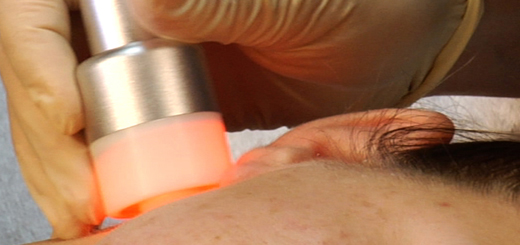
Dr. Pilest is a strong advocate of PhotoDynamic Therapy (PDT). By applying a light-activated solution to the affected skin and then placing the patient under special light sources, deep-seated acne bacteria are destroyed. Even severe or resistant acne that has been non-responsive to other treatments will almost always show great levels of improvement with PDT.

“By making sure acne is controlled early, you can minimize or even eliminate scarring. But if that didn’t happen and patients come to me with scars they’ve endured for years, I know I can help. My biggest professional satisfaction comes when my patients are no longer embarrassed by their skin. Its amazing to see the change in self confidence and self esteem-no matter what age. I call the technology Amazing Lasers because thats exactly what it is – amazing.”

Hydrotherapy Tub and other Wet Body Treatments

Monday, August 3rd, 2009

A hydrotherapy tub is a wet body treatment that can offer underwater hydromassages, Thalassotherapy baths and aromatherapy baths. Wet body treatments are very popular and have very positive effects on the human body.

A hydrotherapy tub allows the customer to receive many positive results with their skin and with their minds. Not only are hydrotherapy tubs used for cleansing purposes, but the water also relaxes the body and mind of the customer. The tubs also strengthen the immune system, improve circulation, metabolism and digestion, while also relieving pain and stress. Warm water is also said to actually lower blood pressure, while it calms the client.

A hydrotherapy tub provides a client with the ultimate relaxation. Clients feel as though this tub is a Wet Body Treatmentstime-out session from the stress of everyday life. Not only is this relaxing but a hydrotherapy tub is also a great cleansing agent as well.

The different offerings from a hydrotherapy tub can consist of hydromassages, thalassotherapy baths and aromatherapy baths. Underwater hydromassages are like a whirlpool or Jacuzzi. There are jets in the tub that can hit certain body parts to offer a relaxing and soothing massage. Thalassotherapy baths allows a client to receive a massage with water pressure and herbal extracts can be added for further relaxation. Some thalassotherpy baths also provide a full body scrub or algae and essential oils can be added to the bath. Aromatherapy baths involve essential oils placed in the tub to help a client relax and diminish many aches and pains.

There are many benefits of the wet body treatments but a spa therapist must know the requirements for set up, have the correct supplies and tools, consult and prepare the client for the treatment and to really know how to use these kind of tubs. In order for the client to receive the best possible care and results, a spa therapist must know how to properly use a hydrotherapy tub and must know all the pros and cons that are related.

To learn more about different wet body treatments, including hydrotherapy, please visit Aesthetic VideoSource. You can watch free video clips and request a free catalog.

European Facials

Sunday, July 26th, 2009

Facial clients are looking for a relaxing way to rejuvenate their skin and refresh their mood. We all know that the personal touch is a key ingredient in any successful facial, but when discussing European facial procedures, the bar is raised to include exceptional indulgence and detailed attention.

When you are sitting down for the first time with a European facial client, you have to bring you A-game. Even if you pride yourself in giving the best facial this side of the Mississippi, the client in front of you hasEuropean Facials elevated expectations of the experience they are about to have and you need to make sure that you dot all your i’s and cross all your t’s during your pre-treatment consultation.

Discuss the European facial process in detail and explain that this experience should be as luxurious as possible, so communication from the client is key. Let your client express what their expectations are for the procedure, what they have heard about European facials and if there are any specific things you can do to make the facial as personal as possible.

Once you have completed your consultation, it’s time to enlist your facial routine including skin analysis and extensive cleansing massage, the next step is an exfoliation (with enzymes) and desincrustation. Once these procedures are complete, it’s time to move on to a comprehensive essential oil massage on the neck, shoulders, décolleté, and upper arms and another round of desincrustation.

The massage aspect of a European facial is what raises it from a typical facial procedure to a luxurious, complete spa experience. Even if you normally enlist massage therapy as part of your facial, either increase the time or change your technique to make the experience as lavish as possible for your client. Follow the neck and shoulder massage with extractions using cotton and extractor and treat with ampoule and cream applications.

It is now time for a product-penetrating facial massage. Again, even if you normally massage in your products at this stage, take a few more minutes to really relax the facial muscles and increase the blood flow as much as possible for your client.
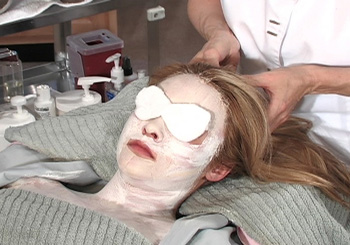
The facial is completed with a mask that is customized for each difference part of the face (T-zone, eyes, and cheeks and décolleté). Hot and cold compresses and protective day creams are then applied to the face while you discuss the experience with your client.

The key element of a European facial is the personal touch and increase in massage therapy to create a luxurious spa experience.

Check out Aesthetic VideoSource new 3 volume European Facial DVD set. Learn step by step, everything you need to know about European Facials from CIDESCO Diplomat, Rita Page.

Facials for Sun Damaged Skin

Monday, July 20th, 2009

It’s so easy to spot: A client that comes for a facial with a peeling nose and raccoon eyes from a day at the beach. Or maybe it’s an older client with sun spots on their hands, shoulders and décolleté from years of sun exposure. Either way, it’s an aesthetician’s job to fight the effects of sun damage end educate their clients’ about the best ways to prevent continued damage.

It is absolutely vital for you to explain to your clients how important it is to protect their skin from the sun’s rays. It may seem like a broken record, but even with all the commercials, creams, tonics and hats sold ever year, protecting skin from sun damage seems to fall at the bottom of many clients’ to-do lists. Be persistent and explain that prevention can not only save skin from permanent damage, but from the constant need to Skin Care Techniquesrepair ongoing dehydration and burning.

When treating a client with sun damaged skin, there are several options for both treatment and prevention. Take the time to do a full skin consultation at the outset of the appointment to find out their skin care habits as well as their average time outside daily. Ask them what their expectations are for their sun damaged skin after a facial treatment.

Knowing their expectations, it’s time to explain your facial procedure for sun-damaged skin. One very effective treatment is a Vitamin C facial. It can counteract the effects of sun-damage and help rehydrate dry skin. Give the client a full overview of your procedure and the benefits they can expect afterwards.

Once you have completed your Vitamin C facial, it’s time to apply the proper ampoules, gommage, enzymes and creams to add the final touches to your facial procedure. Now is the time to talk to your client about their experience with the Vitamin C facial and how it can benefit their sun-damaged skin to use daily skin protection to maintain their skin’s rehydration.

Overall, people need to understand the importance of taking the time to protect their skin and that it need be only a few-minutes-a-day process. Despite the obvious concern about skin cancer, it is usually necessary to be very detailed with your clients about the risks of permanent sun-damage to the skin. Outline the specific products that are used to reverse and prevent sun damage along with their benefits to help educate them. This information can arm them to continue their prevention efforts every day.

The most important factor in facial procedures for sun-damaged skin is education about prevention of further damage. Make a personal effort to teach your clients how they can save their own skin.

Acne- The Four Letter Word of Skin Care

Saturday, July 18th, 2009

Acne, the four-letter-word of the skin world, has been the bane of many people at some point in their lives. Teenagers exhaust shelves of products in drug stores to fight it and some women even suffer from it after they have a child. (Thanks, Mother Nature.) How to fight this nasty foe? A new method of combining experienced facial techniques with an 8-in-1 facial equipment machine is proving to be an effective technique in acne treatment.

Rita Page offers a new way of approaching the acne issue with her revolutionary method of combining skin analysis with tools for a full-scale treatment plan. Her experience in the beauty industry for the last 16 years has given her a broad perspective of effective skin care practices.

Page has been honored globally with as a CIDESCO Diplomat, the most prestigious aesthetic credential in the world. A graduate of the University of Arizona with a bachelor’s degree in Textiles and Chemistry, she studied at the Linda Seidel Institute for Corrective Makeup in Baltimore, MD. After polishing her makeup skills in California at the M.G. Westmore Academy of Cosmetic Arts, the most advanced makeup training in the country, she founded the Paramedical Clinic where physicians referred patients for postsurgical conditions, deformities and burn treatment.

Having been a beauty therapist and educator at both the Golden Door and Cal-a-Vie salons, Page brings her expertise back to the salon with this process that educates her clients how to best utilize the tool and tricks of the skin care trade to fight acne.

Once a skin analysis is complete, the tools are implemented. Using a steamer, with and without ozone or a galvanic current can be highly effective in treating acne. Combining these tools with a rotary brush, a vacuum, Lucas spray and CO2 spray enhance this process.

Traditional skin care comes into play next with deep pore cleansing, gommage, desincrustation, extractions, corrective cream and a mask. A post-treatment consultation is the last step in this procedure, verifying the client’s comfort level and final feelings about the results.

Many of the tools and methods Page implements are used separately by aestheticians or dermatologists in treating acne. She has found a method for combining them for the best possible results. With each acne condition having so many possible causes, knowing what tools you can best utilize to battle it could be the difference between success and failure.

To learn more about Rita Page and her educational DVD’s on various types of Esthetic treatments, visit Aesthetic VideoSource. They have videos on everything from paraffin treatments to chemical peels to microdermabrasion. Stop by today and request a free catalog.

Hair & Skin Care for Summer

Sunday, July 12th, 2009

It’s time for the bathing beauties to march in full force to the nearest waterside oasis and take a perch in the sun. Still, before summer’s goddesses can soak up their golden rays, there has to be some preparation.Some advice from beauty experts:

Sunscreen
The need for sunscreen should go without saying but, despite the direct link made between sun damage and skin cancer, some people still resist, says Dr. David Bank, of Mount Kisco, N.Y.
Maybe sunscreen irritates sensitive skin or aggravates acne in oily skin? Products that use the minerals zinc oxide or titanium dioxide are less likely to stir up those conditions, according to Bank, founder of the Center for Dermatology, Cosmetic and Laser Surgery. Zinc and titanium are commonly referred to as “chemical-free” blocks and have some anti-inflammatory properties as well as some anti-bacterial ones so they tend to work well for both skin-type extremes — the sensitive and the acne prone, he adds.

Also, he suggests, those with sensitive skin can look for sunscreens that contain soothing aloe, and those with acne-prone skin should consider oil-free preparations with a light texture.
Linda Wells, editor in chief of Allure magazine, encourages application of sunscreen before you even put a swimsuit on. If you’re naked, she says, you won’t miss a spot. “You have to put on sunscreen. I know it sounds school marmish, but it’s just egregious when people don’t wear it. Otherwise, you get wrinkles and dark spots and you look like an old, beat-up handbag,” Wells says.

Consumer Reports’ July issue finds sunscreen to be pretty resilient.
The magazine’s tests found that in addition to protecting against both UVA and UVB rays, they were water resistant — losing no more than 10 percent of UVB protection after being immersed in water for 40 minutes — and lotions and sprays were both effective. Still, Bank says, no formula is 100 percent water- or sweat-proof, and sunscreen should be reapplied every two hours. The three to earn Consumer Reports’ Best Buy label were Walgreens Continuous Spray Sport SPF, Coppertone Water Babies SPF lotion and Target Sport Continuous Spray SPF 36. .

Makeup
On the beach or by the pool, wear as little makeup as possible because, in bright sunlight, it becomes “quite visible” and you risk looking clownish, says Allure’s Wells. For the lip gloss (with SPF) and waterproof mascara you might wear, choose soft, natural colors, she suggests. “It’s not the time for opaque Parisian French lipstick … and no shimmer on the face. It looks strange in the light of day.”
However, once you’re done in the sun for the day and your skin has a deeper tone — whether it’s natural or bottled — it’s time to punch up the color, advises makeup artist Ashunta Sheriff.
Sheriff, an adviser to Mary Kay Cosmetics, recently returned from a Caribbean vacation and made the shift from a light coral blush to a full-blown spice color, she says.
“You should wear the same color family that you wear in the winter or spring, but now you should be getting deeper,” she advises. For a woman with light skin who gravitates toward pinks and nudes for her lips and cheeks, try tawny or apricots, and those with olive skin who normally wears peach might consider coral. Orange-coral colors, raspberry, cinnamon and spicy brown all complement darker skin once they’ve had a hint of sun.

Hair
Long HairstylesWet your hair before you wet your body, advises stylist Robert Vetica, dousing with tap or bottled water. This fills the cuticle, making it harder for salt or chlorine to penetrate it. And, Vetica adds, color-treated hair might need extra protection, perhaps from a UVA-blocking treatment.

Generally, though, there’s little use for other products, says Vetica, who features the tresses of client Salma Hayek on the cover of his book “Good to Great Hair.”
“Heat and moisture will change the molecular structure of your hair so the products you apply before exposure to these elements will add unnecessary strain on the hair,” he says.

Same goes for styling tools. Instead, he says, let your hair dry “au naturale.” “There is nothing like a beautiful sun-kissed face with hair pulled up or behind in a low messy pony for an evening out,” he says.
Even be conservative with the use of shampoo since chlorine and salt water both serve as cleansers. But you do need a good rinse with clean water before drying off for good, he says. If your hair does look fried, get a trim since most of the damage occurs at the ends

Researching Chemical Peels

Thursday, July 2nd, 2009

Sacramento, CA (PRWEB) — Because a chemical peel is a particularly aggressive treatment, it is crucial to separate the facts from the myths before scheduling this procedure.

1. Always get a skin consultation first, in order to get an in-depth skin type analysis. This will make it easier to schedule the correct chemical peel. Dermatologists, plastic surgeons, licensed estheticians or registered nurses can perform chemical peels. When going to a day spa, there should be a waiver or peel consent form to sign prior to the peel, in order to protect both the patient and the day spa. Even when performed at a medical spa or in a doctor’s office, there is always a risk when trying something new on the skin. Also, make sure the professional is well-qualified to perform the treatment. Check educational and training background, Chemical Peel Videocredentials and experience. It’s important to know how often he/she has performed the procedure. Also ask to see before and after pictures of patients with chemical peels. Ask the specialist for a complete list of instructions for before and after treatment. Also ask what type of support is offered.

2. Chemical peels are not necessarily good for all skin types, especially for severely dry or hyper-sensitive skin. A peel can exacerbate symptoms like flaky, itchy and red skin. On the other hand, acneic skin and acne scars can be softened with chemical peels. Not only do the acids kill active blemishes on the surface, but they also help prevent more blemishes from forming.

3. Chemical peels are effective for treating severe acne. There are many ways to treat severe acne and acne scarring, but remember acne has four grades of its own, plus hormonal and genetic acne. A person with grade 1 acne has minor blemishes, milia and blackheads. At the other end of the spectrum, people with grade 4 acne usually have severe inflammation, and the cysts (blemishes) are deeper. People with severe cases of acne may need Accutane and should consult a dermatologist. The other grades of acne can be treated with such chemical peels as Jessner’s or Sal Ex peel.

4. There are actually many types of chemical peels, with various strengths and costs — from $75 to $600 or more. Each is highly effective in its own way. The most common are Alpha hydroxyl acids, Jessner’s Peel, Sal Ex 20%, the Oceanix Peel and the green Herbal Peel.

5. Always use pre-skin care products for at least two weeks before getting a chemical peel. Most pre-care products are designed to thin out the skin’s surface, allowing the peel to penetrate deeper.